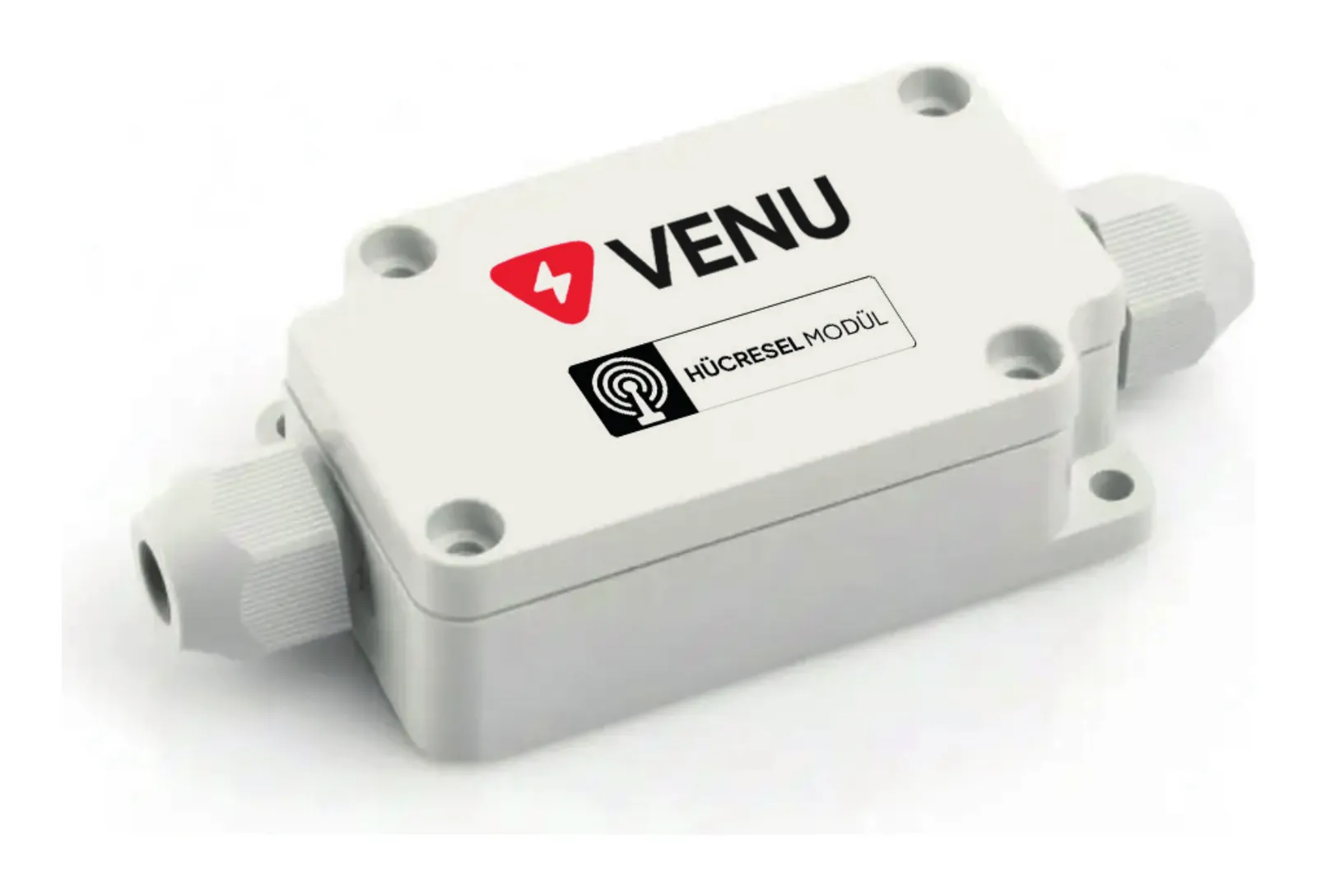
Product code: CM-G200
Cellular GSM Module
An LPWAN-class cellular (GSM) communication module for the IQ Panel.
Gives the IQ Panel an independent uplink over the public mobile network at sites with no corporate network. Distribution centres, pump stations, remote substations and base stations are typical applications.
- IP67
- MQTT/TLS
- HTTPS
The Cellular GSM Module gives the IQ Panel an independent uplink over the public mobile network at sites with no corporate network. Distribution centres, pump stations, remote substations and base stations are typical applications.
The module runs on LTE Cat-M1 (LTE-M) and NB-IoT. These low-power wide-area (LPWAN) cellular standards have replaced the 2G networks now being shut down; in terms of in-building penetration and network support lifetime, they are the right technology class for industrial IoT.
Data integrity and security
Telemetry is carried over MQTT with TLS; no inbound port needs to be opened on the customer side. Outgoing data is stored in a local buffer during coverage gaps and transmitted in order once the connection returns.
The IP67 enclosure and external SMA antenna input allow the radio to be positioned outside a metal cabinet or kiosk, at a point with usable signal strength.
Key features
- Independent uplink requiring no corporate network; a SIM subscription is the only site infrastructure needed.
- LTE-M and NB-IoT — low power consumption, deep in-building penetration and a long network support horizon.
- Store-and-forward buffering maintains data continuity across coverage gaps and cell handovers.
- End-to-end TLS; no inbound port needs to be opened on the customer side.
- External antenna lets the radio be positioned according to signal strength.
- eSIM option removes the need for physical SIM swaps across a distributed device fleet.
Technical specifications
Cellular technology
| Product code | CM-G200 |
|---|---|
| Cellular technology | LTE Cat-M1 (LTE-M), NB-IoT |
| Legacy support | 2G/GSM — only in regions where the network is still in service |
| Frequency bands | Region-specific variant |
| SIM | Nano-SIM; eSIM option |
Protocol and antenna
| Protocols | MQTT/TLS, HTTPS |
|---|---|
| Antenna | External SMA connector |
Data and interface
| Data integrity | Local buffer, ordered transmission on reconnect |
|---|---|
| Interface | IQ Panel expansion slot |
Electrical and mechanical
| Power supply | 9-36 VDC (24 VDC nominal) |
|---|---|
| Operating temperature | −20 °C … +60 °C |
| Ingress protection | IP67 |
| Enclosure | ABS, 80 × 50 × 25 mm, with glands |
Frequently asked questions
Why LTE-M and NB-IoT rather than classic 2G/GSM?
LTE Cat-M1 (LTE-M) and NB-IoT are low-power wide-area (LPWAN) cellular standards that have replaced the 2G networks now being shut down. In terms of in-building penetration and network support lifetime, they are the right technology class for industrial IoT. 2G/GSM is offered only as legacy support in regions where the network is still in service.
Do we need to open an inbound port on our firewall?
No. Telemetry is carried over MQTT with TLS and the connection is always established outbound from the device; no inbound port needs to be opened on the customer side.
Is data lost if coverage is weak or a cell handover occurs?
No. Outgoing data is stored in a local buffer during coverage gaps and transmitted in order once the connection returns. The external SMA antenna input allows the radio to be positioned outside a metal cabinet or kiosk, at a point with usable signal strength.
How does SIM management get easier across many scattered devices?
The eSIM option removes the need to visit sites for physical SIM swaps across a distributed device fleet.