Remote and distributed sites
Monitor the points your corporate network never reaches, on the same platform.
Substations, pump stations and distribution network field sites usually sit outside the corporate network. Building a separate monitoring stack for them is both costly and produces a different data model from the one used at the centre.
Contact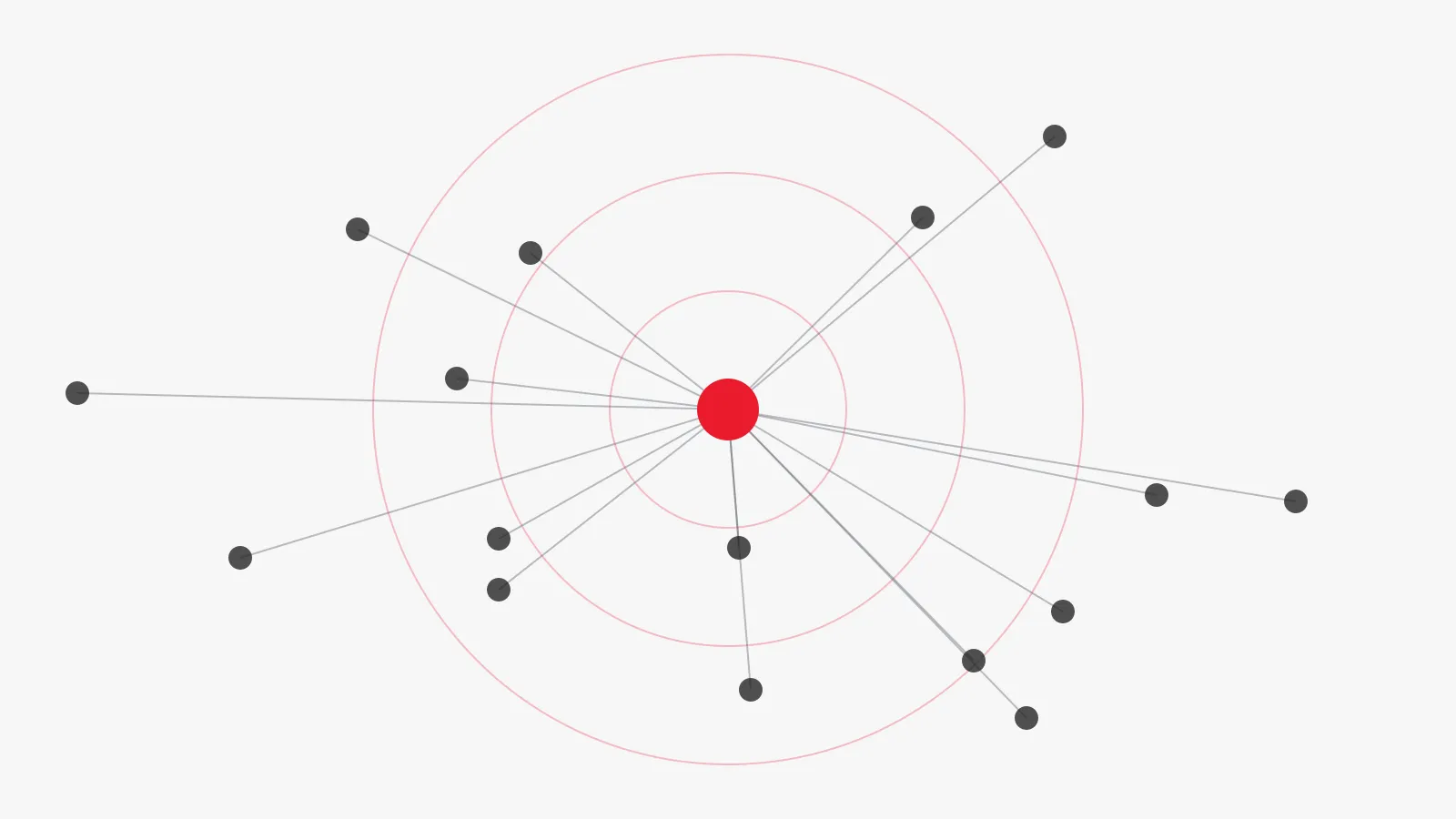
The problem is not connectivity, it is continuity
When a panel starts heating up in a remote substation, the nearest maintenance team is kilometres away. What is asked of a monitoring system there is not just to collect data, but to buy enough time to intervene.
Cortex separates two distinct concerns at this point. Measurement and decision happen on site, on the IQ Panel — with or without a connection. The communication layer is responsible for carrying that decision to the centre, and it is chosen to match the site’s infrastructure.
Choosing a module
The Cellular GSM Module (CM-G200) provides an independent uplink over the public mobile network where there is no corporate network. It runs on LTE Cat-M1 (LTE-M) and NB-IoT; these LPWAN-class standards have replaced the 2G networks now being shut down and, in terms of in-building penetration and network support lifetime, are the right class for industrial IoT. Telemetry is carried over MQTT with TLS and the connection is always established outbound from the device — no inbound port needs to be opened on the customer side.
The LoRaWAN Module (CM-L300) is for topologies where many points are spread across a wide geography. A single gateway provides kilometre-scale coverage; electricity distribution networks, ports, large industrial campuses and municipal infrastructure are typical applications.
What happens during an outage
Both modules use store-and-forward buffering. Outgoing data is held in a local buffer during coverage gaps and transmitted in order once the connection returns. No hole appears in the trend history — which matters for predictive maintenance models to work correctly.
Recommended product combination
- CM-G200Cellular GSM ModuleAn LPWAN-class cellular (GSM) communication module for the IQ Panel.
- CM-L300LoRaWAN ModuleA long-range, low-power communication module for wide-area field topologies.
- CTX-IQ-100IQ PanelThe edge controller that hosts the Cortex platform's embedded AI inference engine.
- ARF-005ArcFire SenseA multi-channel gas, thermal and electrical signature probe for electrical panels.
Frequently asked questions
What if a remote site has no internet infrastructure?
The Cellular GSM Module (CM-G200) provides an independent uplink over the public mobile network; a SIM subscription is the only site infrastructure needed. Because it runs on LTE Cat-M1 and NB-IoT, in-building penetration is strong.
With many scattered points, won't cellular subscription costs be high?
In that case the LoRaWAN Module (CM-L300) is a better fit. A single gateway provides kilometre-scale coverage, and the communication cost per node falls markedly as the number of points grows. In return, duty-cycle limits mean the module transmits derived data rather than raw telemetry: risk score, alarm state and periodic summary values.
Is data from an outage period lost when the link drops?
No. The modules store outgoing telemetry in a local buffer for the duration of the coverage loss and transmit it in order once the connection returns, leaving no gap in the trend history.
Are alarms still raised while the link is down?
Yes. Risk scoring and alarm generation run at the edge on the IQ Panel, independently of the communication layer. The dry-contact relay outputs also operate independently of connectivity.